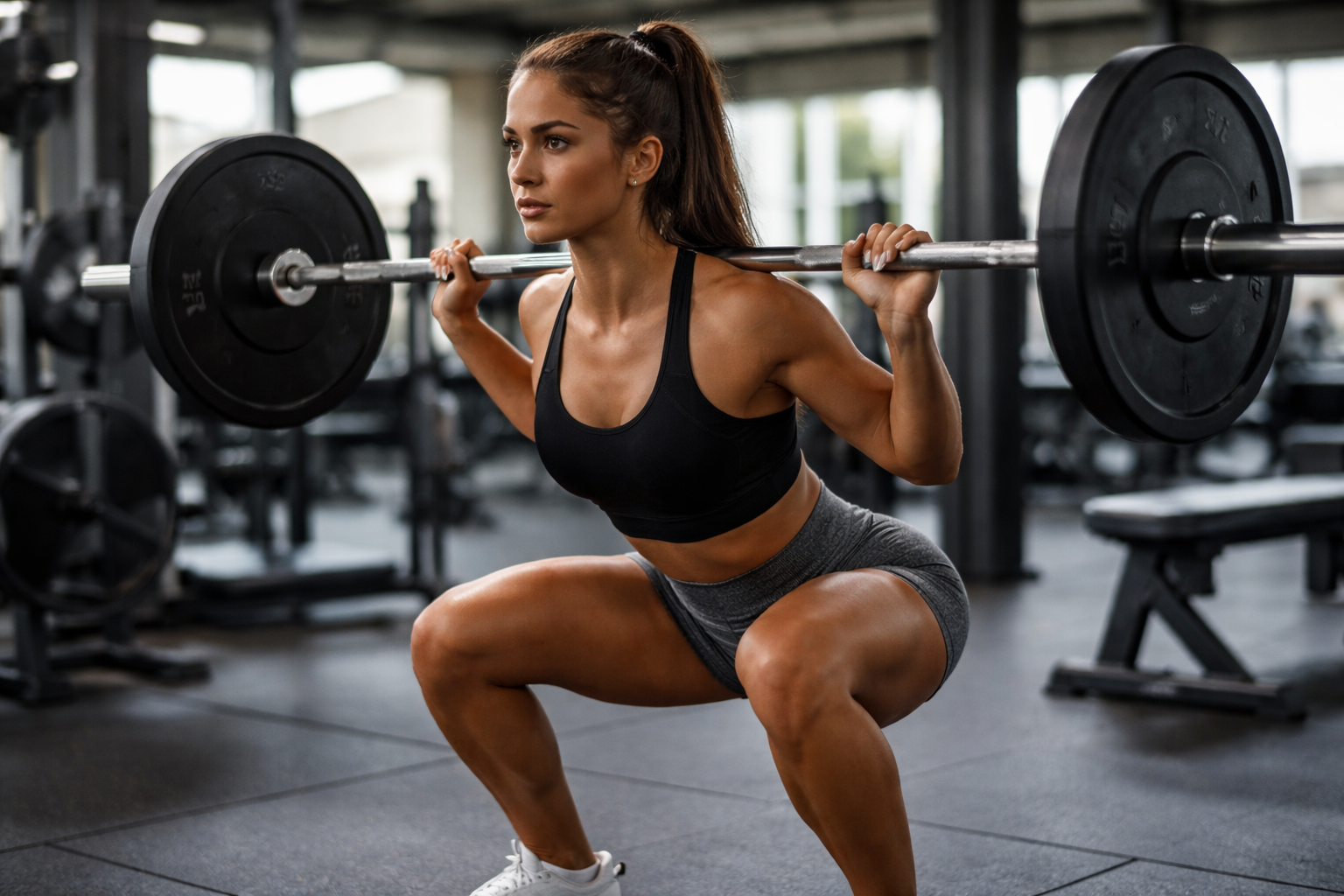
The squat is one of the most fundamental movements in strength training, but it's also one of the most commonly performed incorrectly. Whether you're new to squatting or looking to refine your technique, this guide will help you build a solid foundation.
Proper Setup and Stance
Before you even begin the movement, your setup is crucial. Start with your feet around shoulder-width apart, toes pointed slightly outward (commonly 15-30 degrees, but this varies by individual). Your stance width and toe angle should allow your knees to track comfortably over your toes—some lifters need narrower or wider based on hip structure and limb proportions.
Your bar position matters too. For a high-bar squat, rest the bar on your upper traps. For low-bar, position it lower across your rear delts. Choose the style that feels most comfortable and allows you to maintain better form.
The Descent Phase
Initiate the movement by allowing your hips and knees to bend together—think "sit between your heels" rather than excessively pushing your hips back (which can turn it into a good morning). Keep your chest up and core braced throughout the entire movement.
Your knees should track in line with your toes. Don't let them cave inward—this increases stress on the knee joint and can elevate injury risk. Actively push your knees out as you descend.
Finding Your Depth
Aim to squat to at least parallel—where your hip crease drops below the top of your knee. However, only go as deep as you can while maintaining proper form. Depth should never come at the expense of a neutral spine or proper knee alignment.
If you struggle with depth, work on ankle mobility and hip flexibility. Many people are limited by tight ankles or stiff hips rather than strength.
The Drive Up
The ascent is where power meets technique. Drive through your entire foot—not just your toes or heels. Think about pushing the floor away from you. Keep your chest up and maintain the same torso angle you had at the bottom.
Maintain your brace throughout—you can let out a controlled breath near the top if needed, but for heavy sets many lifters hold their breath (valsalva) until lockout. Don't lose tension at the top—maintain that tight core until you've completed the rep.
Common Mistakes to Avoid
- Knees caving in: This increases stress on your knee joints and can elevate injury risk. Focus on pushing your knees out.
- Rising hips first: Your hips and chest should rise at the same rate. If your hips shoot up first, you're turning it into a good morning.
- Looking up or down: Keep your neck neutral. Your gaze should be fixed on a point about 6 feet in front of you.
- Not bracing: Take a big breath before each rep and brace your core like you're about to be punched.
- Squatting on unstable shoes: Use flat, hard-soled shoes. Running shoes compress and make it harder to stay balanced.
Mastering the squat takes time and practice. Start with bodyweight squats to groove the pattern, then gradually add load as your form improves. Consider recording yourself or using Reform's AI form analysis to get real-time feedback on your technique.